Radiator Installation

Moving radiators

Radiators moved to free up wall space for kitchens, wardrobes and furniture, with pipework altered and made good. Typical UK costs and what is involved.

In short: Moving a radiator means taking it off its current wall, extending or rerouting the pipework and refitting it, or a replacement, in a new position. It suits kitchen and bathroom refits, built-in wardrobes and rooms where a radiator blocks furniture. Moving a radiator typically costs £200 to £500 in the UK, depending on how far the pipes need to go.

Get a free quote

Fixed price, no obligation. We aim to reply the same day.

By sending this form you agree to be contacted about your enquiry. See our privacy policy.

Moving radiators

Radiators were traditionally placed under windows to counter the cold down-draught from single glazing. With modern double glazing that matters far less, so many people move radiators to free a window wall for a kitchen run, a desk or a bed, or to make space for fitted wardrobes. The radiator can go almost anywhere on an inside or outside wall, as long as the pipes can reach it and the wall can take the fixings.

The cost and mess depend on the distance and route. Moving a radiator a short way along the same wall may only need short pipe extensions, while moving it to the opposite side of the room usually means lifting floorboards or running pipe across the floor void. The old pipe tails are capped or removed below the floor and the holes in the wall and floor are filled, ready for decorating.

What is included

  • Agreeing the new position and checking the wall can take the fixings
  • Draining down the system
  • Removing the radiator and capping or removing the old tails
  • Extending or rerouting flow and return pipework
  • Refitting the radiator, or a new one, with new valves if wanted
  • Filling fixing holes and pipe holes ready for decoration
  • Refilling, adding inhibitor, bleeding and balancing

Who it is for

  • Kitchen refits where units need the radiator wall
  • Bathroom refits moving to a towel rail or new layout
  • Fitted wardrobes, shelving or media walls
  • Bedrooms where the radiator stops the bed going where you want
  • Homes changing from under-window to inside-wall layouts

How much does it cost?

As a guide, moving a radiator usually costs £200 to £500, rising where pipes run across a concrete floor, through walls or a long distance. Combining it with other heating work in the same visit saves on draining and refilling. See our full cost guide.
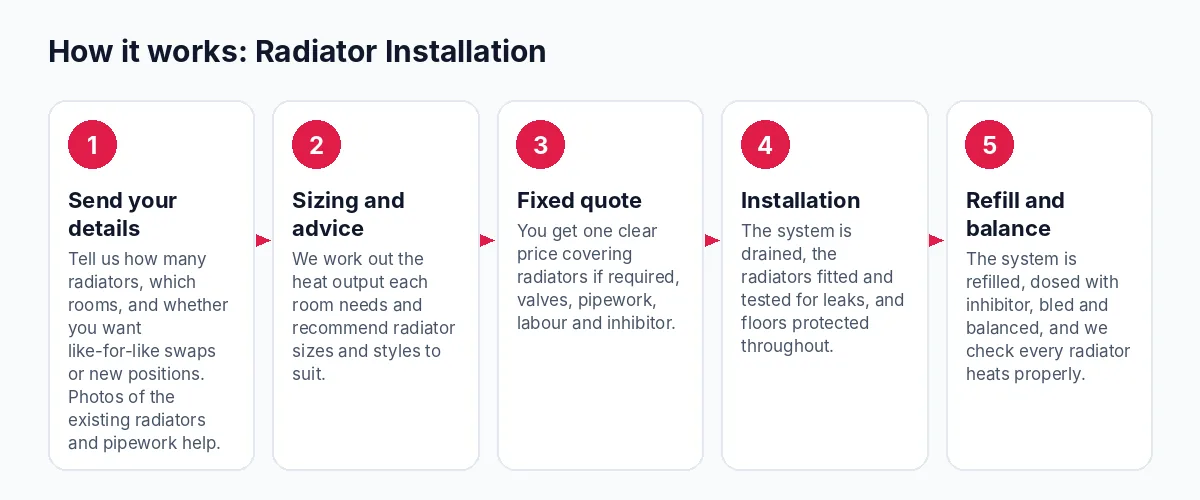
How it works

How moving radiators works, step by step
  1. Pick the new spot

    The new position is agreed, checking for hidden cables and pipes, wall strength and whether there is enough wall for the radiator's output.

  2. Drain and remove

    The system is drained, the radiator taken off and the old pipe tails cut back and capped under the floor.

  3. Reroute and refit

    New pipework is run to the new position, the brackets are fixed and the radiator is hung and connected.

  4. Refill and make good

    The system is refilled with inhibitor and bled, joints are checked, and old holes are filled ready for painting.

Moving radiators: FAQs

Does a radiator have to go under a window?

No. Under windows was the traditional position to counter cold draughts from single glazing, but with modern double or triple glazing a radiator works well on any wall. An inside wall can actually lose slightly less heat to the outside. The radiator just needs to be sized correctly for the room.

Can a radiator go on a plasterboard wall?

Yes, with the right fixings. Smaller radiators can be hung on heavy-duty plasterboard fixings, but larger or heavier ones, especially column radiators, should be fixed into timber noggins or studs. Where a stud wall is being built or opened up, adding noggins at bracket height is the simplest solution.

Will moving a radiator damage my floor?

Usually some boards need to be lifted to reroute the pipes, and they are relaid afterwards. Laminate, engineered wood and tiled floors take more care and sometimes need a small section cut and refitted. If the floor is about to be replaced, moving the radiator first is the easier order.

Can I swap to a vertical radiator when moving it?

Yes, and it is a popular way to free up wall width. A vertical radiator needs the same heat output as the old one, so check its rated output carefully, as tall narrow radiators can give less heat than their size suggests. The pipework is set to suit the new radiator's connections.

Get a quote for moving radiators

Send a few details and get one clear, fixed price, usually the same day.

Get a quote

Last updated 6 November 2026